Project Details
PROJECT OVERVIEW
WhaleQuest is a dark-themed mobile app prototype designed to make whale watching more interactive, educational, and memorable.
The app brings together real-time whale tracking, species profiles, guided tour discovery, 3D anatomy exploration, trip booking, and a custom merchandise experience. Designed in Figma, the project explores how mobile UX can connect ocean tourism with marine science education and conservation storytelling.
The experience was shaped around two key audiences: research-driven educators who need credible information for fieldwork and learning, and younger explorers who want immersive, visual, and shareable experiences. WhaleQuest turns whale watching from a one-time activity into a deeper journey of discovery before, during, and after the trip.
challenges
Whale watching experiences are often fragmented. Tourists want memorable, shareable moments, educators want accurate learning tools, and researchers need credible information — but most platforms focus on only one part of the journey.
The challenge was to design a mobile experience that could support both discovery and depth. A first-time whale watcher should be able to quickly find tours, track sightings, and learn about species without feeling overwhelmed. At the same time, a marine science educator or researcher should feel that the content is organized, credible, and useful for planning fieldwork or student learning.
The core problem was not just access to whale information. It was turning whale watching into a guided experience that continues before, during, and after the trip.
solutions
I designed WhaleQuest around a connected mobile journey: discover, track, learn, book, and engage.
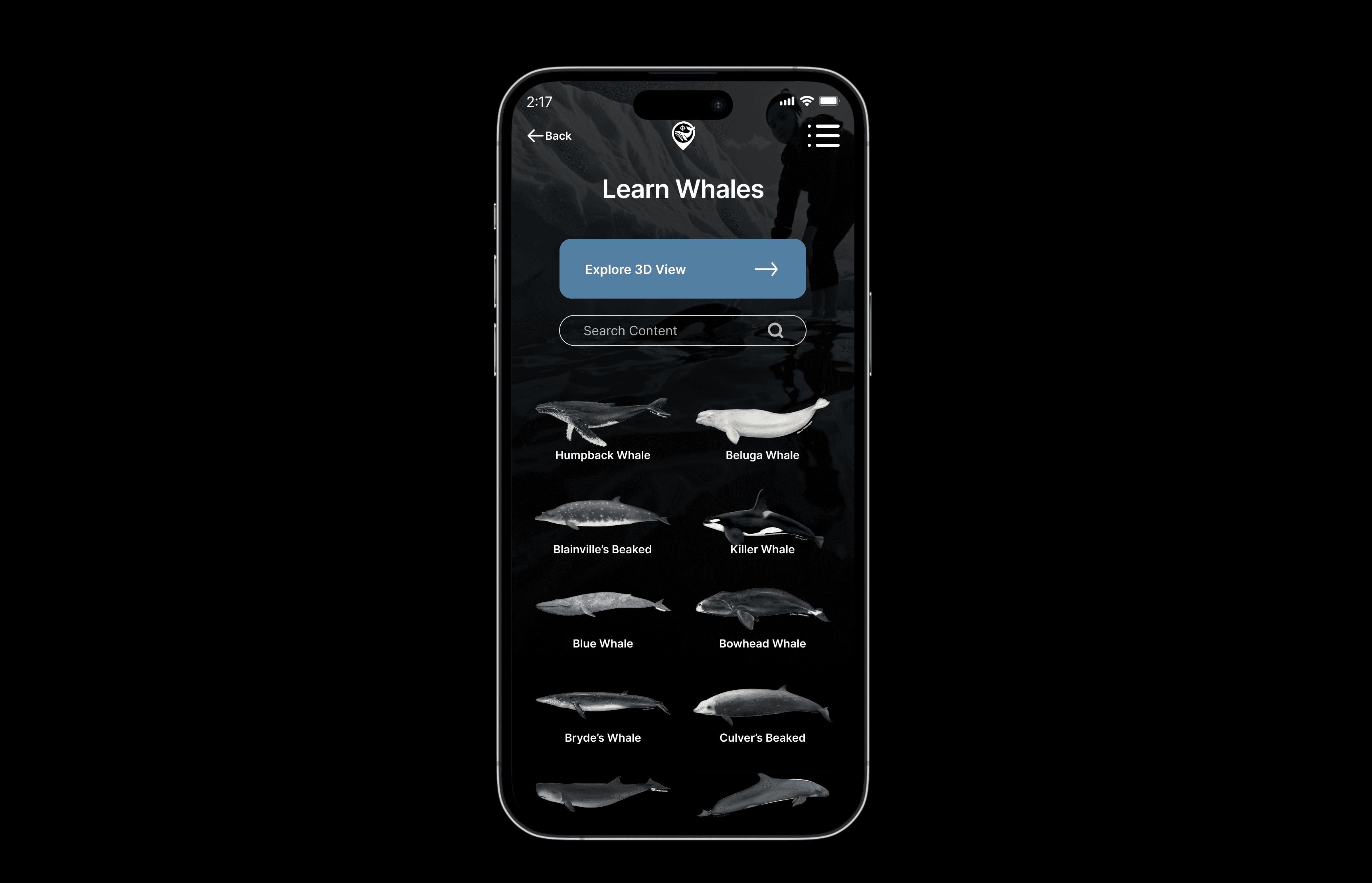
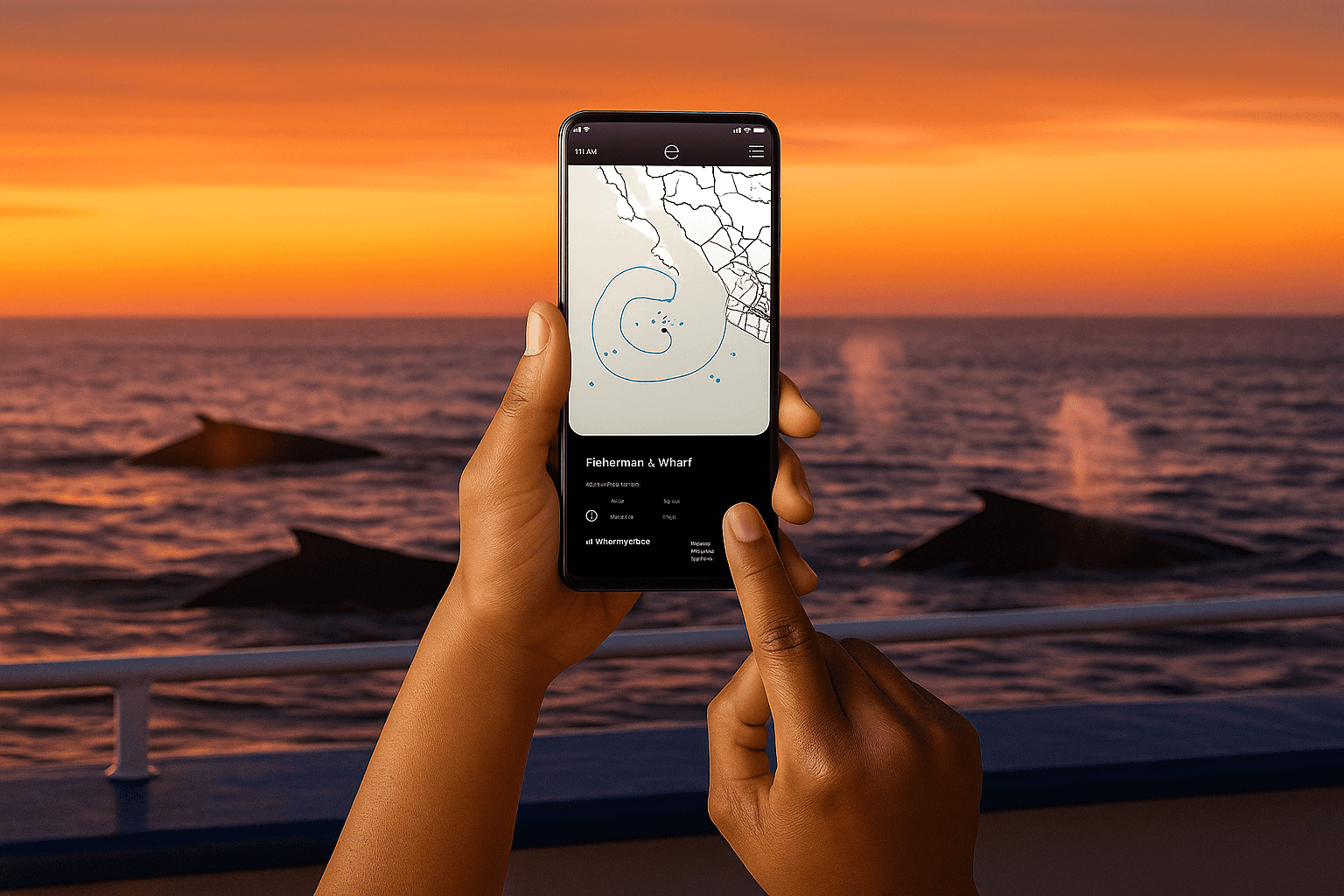
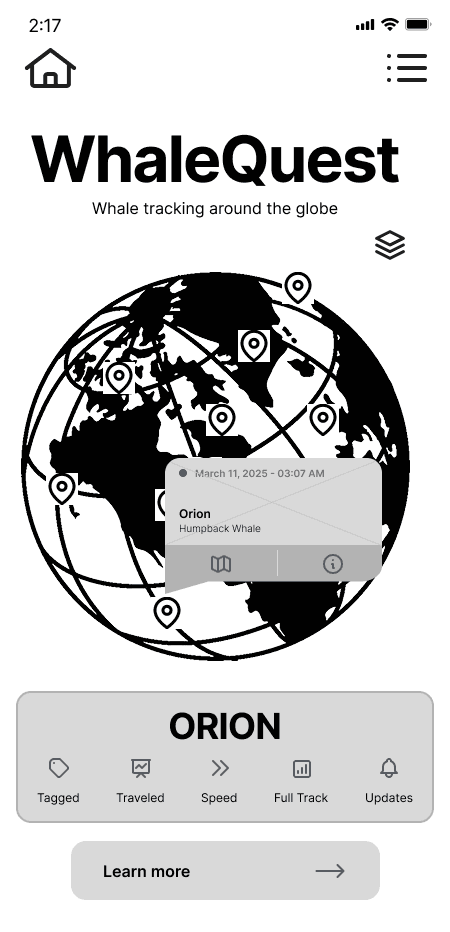
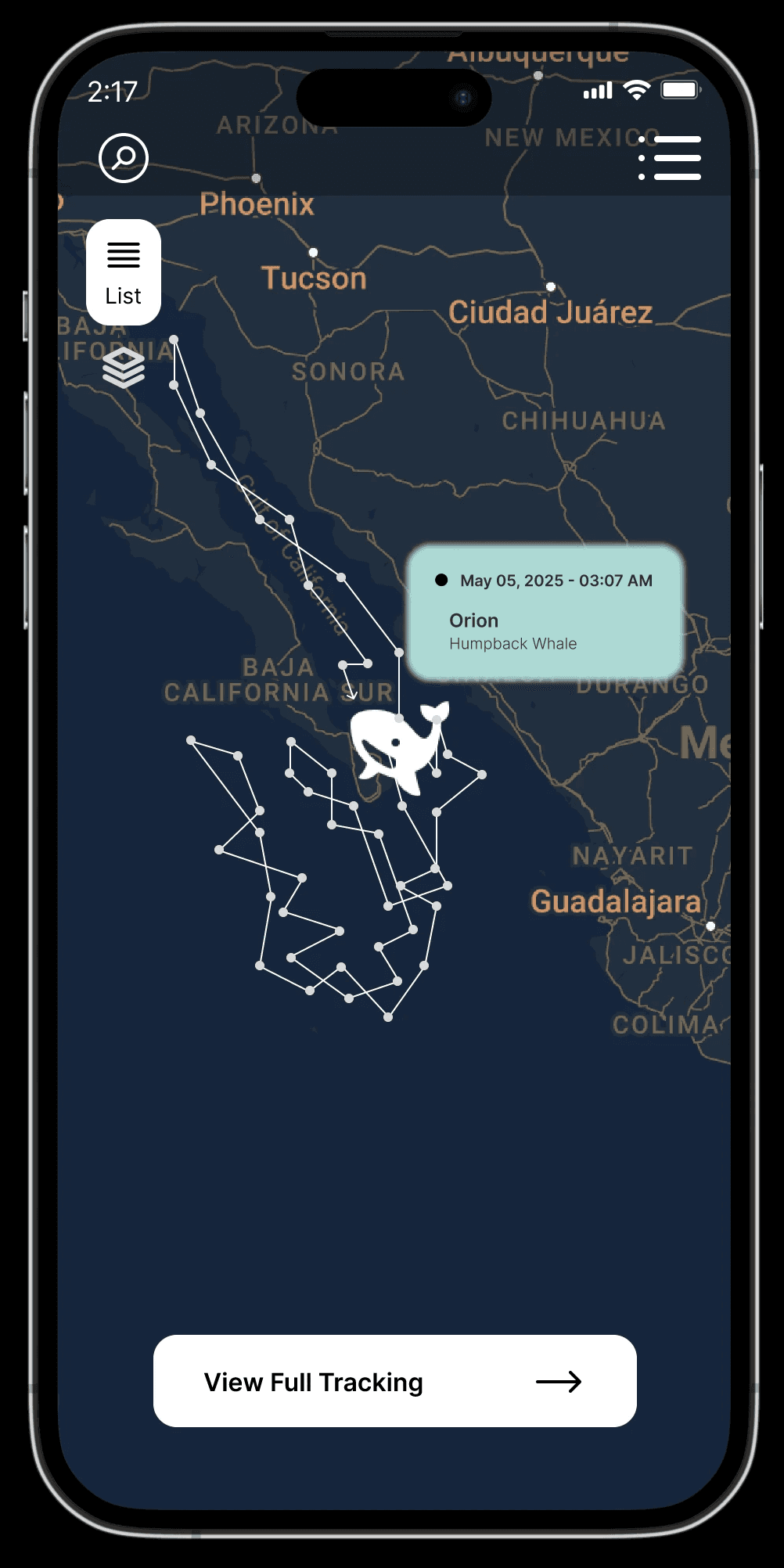
The app includes a real-time tracking experience where users can explore whale sightings and migration activity, supported by species profiles that explain key details in a clear and visual way. To make the educational side more immersive, I included 3D anatomical model exploration so users can better understand whale biology beyond static facts.
The booking flow supports users who want to plan whale-watching trips, while the guided tour content helps connect travel decisions with learning goals. I also included a merchandise feature with a t-shirt designer to extend the experience into something more personal and shareable.
The product was shaped around two key audience types: a research-driven educator who needs credible, fieldwork-friendly information, and a younger explorer or travel creator who wants an immersive, gamified, visually engaging experience. This helped the app balance scientific trust with emotional discovery.
impact
WhaleQuest became more than a whale-watching app concept. It became a full mobile experience that connects education, exploration, and conservation storytelling.
The project demonstrates my ability to design for multiple user needs within one product ecosystem. I considered the needs of tourists, educators, students, and research-minded users, then translated those needs into a visual mobile prototype with clear flows and engaging interaction points.
For portfolio audiences, WhaleQuest shows my strength in building product narratives, designing image-heavy mobile interfaces, organizing complex educational content, and turning a niche subject into an accessible digital experience. It also reflects my interest in immersive learning, 3D visualization, and experience design that makes information feel more meaningful and memorable.
5
Core User Stories Designed
Real-Time
Whale Tracking Experience
3D
Interactive Anatomy Concept
Figma
High-Fidelity Prototype Built