Project Details
Harvard Educational Media Project
United States
UX/UI, Instructional Design
12–14 Weeks
PROJECT OVERVIEW
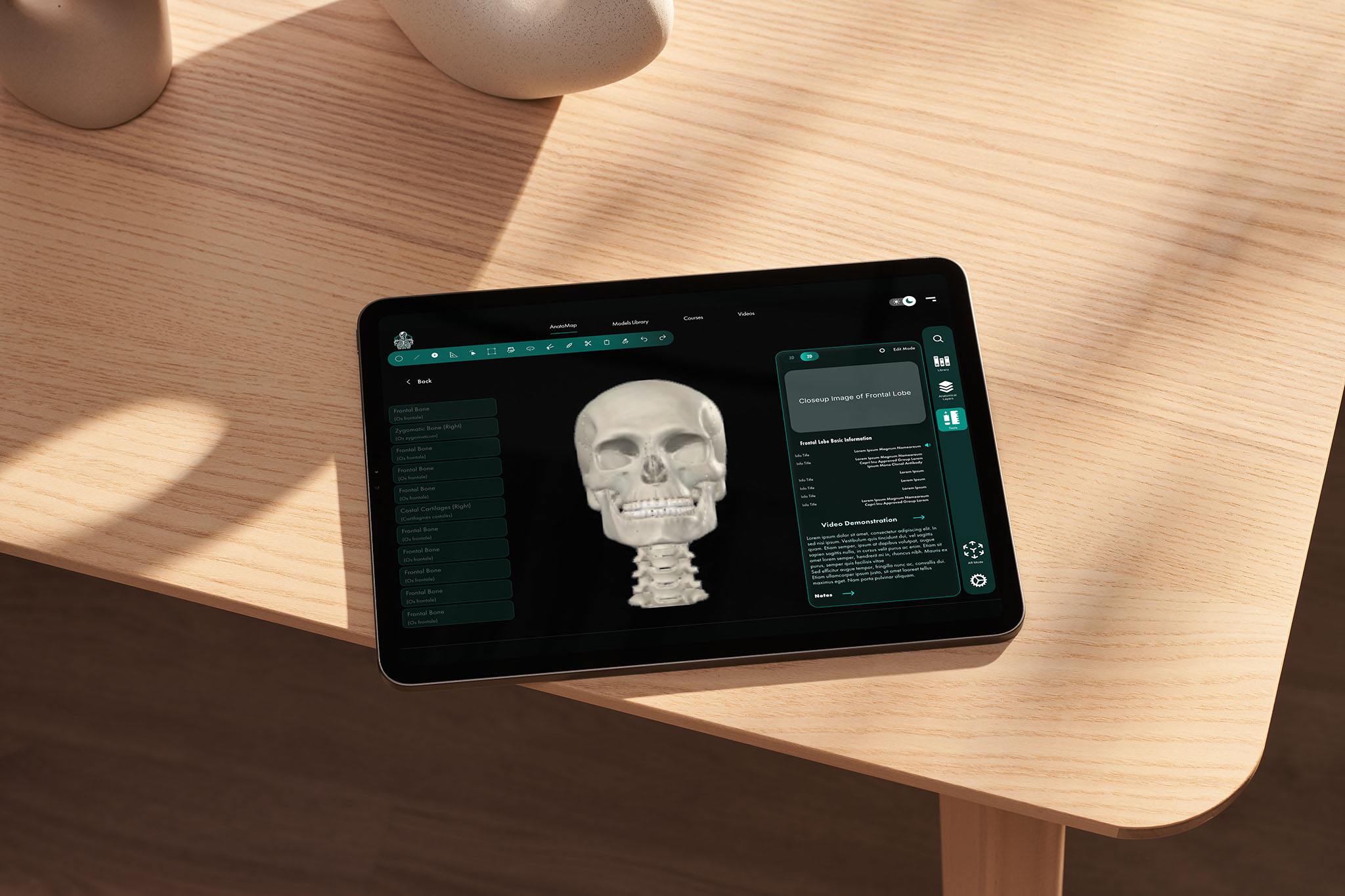
AnatoXR is an interactive 3D anatomy learning platform designed to help medical students explore complex anatomical structures through immersive, visual learning.
Created as my final project for Designing Educational Media, the app combines interactive 3D models, structured anatomy courses, and a dark medical-tech interface to make studying feel more focused and engaging. Instead of relying only on static diagrams or dense text, AnatoXR allows learners to rotate, inspect, and understand anatomy as a spatial system.
The project also included a usability testing script with tasks focused on first impressions, feature clarity, learning effectiveness, and overall usability. AnatoXR demonstrates my ability to design educational products that are not only visually polished, but also grounded in learning goals, user research, and emerging technology.
challenges
Anatomy is highly visual and spatial, but many learning tools still present it in a flat, overwhelming, or disconnected way. Students are often expected to memorize complex structures through static diagrams, dense text, and scattered resources.
The challenge was to design a learning experience that could make anatomy feel more interactive without becoming distracting. The product needed to support focused study, quick comprehension, and deeper exploration while still feeling credible enough for medical education.
The core problem was not simply access to anatomy content. It was how to organize complex visual information in a way that helps students understand relationships, retain knowledge, and feel more confident as they learn.
solutions
I designed AnatoXR as a 3D-first educational platform centered around exploration, structure, and guided learning.
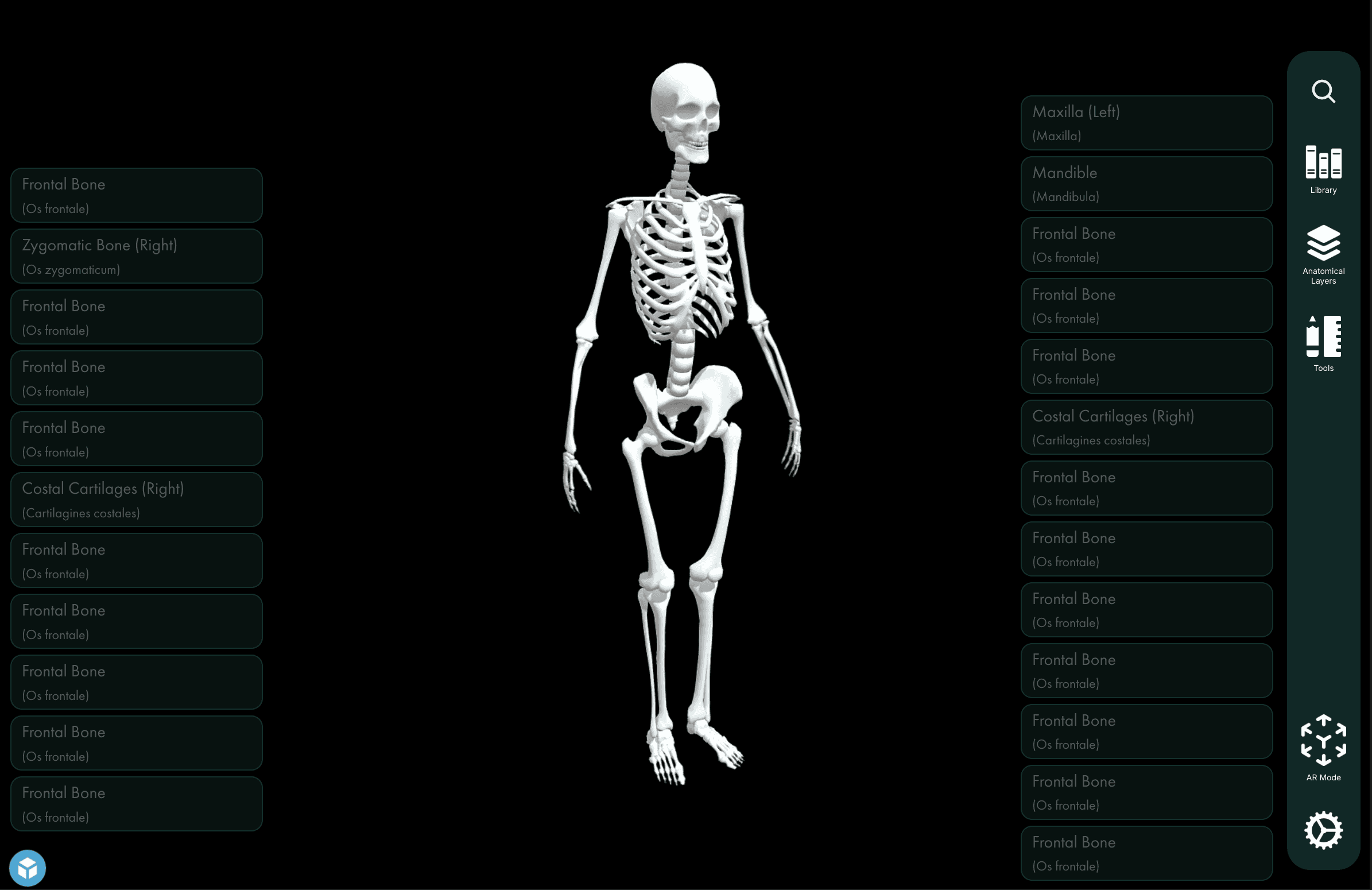
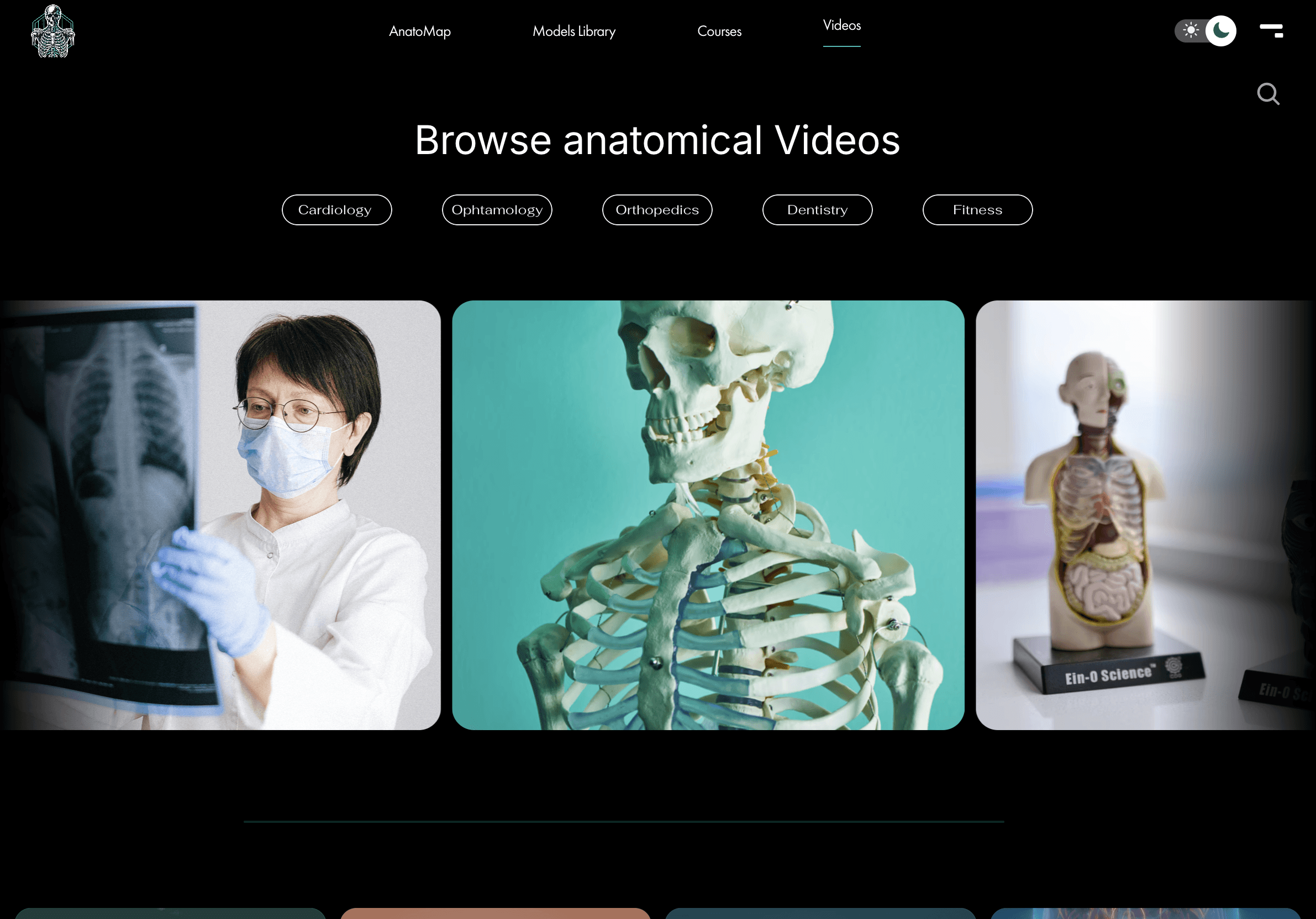
The experience includes interactive anatomy models that allow students to rotate and inspect body systems in a more spatial way. To support learning progression, I added a Courses section where users can move through structured anatomy topics instead of feeling dropped into a library of disconnected models.
The interface uses a dark background with white typography and green accents to create a focused, high-contrast learning environment. Since the product is image-heavy, I organized content with strong visual hierarchy, clean navigation, and modular cards that make each section easier to scan.
The project also included a usability testing plan and script, with tasks organized around first impressions, formal features, outcome effectiveness, and usability. This helped evaluate not only whether users could move through the platform, but whether the experience actually supported learning goals.
impact
AnatoXR became a complete educational product concept that connects UX design, immersive technology, and learning strategy.
The project demonstrates my ability to design beyond surface-level interface screens. I considered how students learn, how complex information should be structured, and how 3D interaction can support comprehension rather than just act as a visual feature.
For portfolio audiences, AnatoXR shows my strength in building digital learning experiences that are both visually compelling and pedagogically grounded. It also reflects my ability to work across product design, 3D content integration, usability testing, and educational media — a combination that is especially valuable for edtech, healthcare, XR, and AI-powered learning products.
6
Core Learning Sections Designed
12+
Usability Tasks & Questions Created
3D
Interactive Anatomy Model Experience
4
Testing Categories Evaluated